Moravia's Hidden Capital: Why Olomouc Deserves a Full Day (2026 Guide)
Ivo Salay • September 13, 2026
A capital that lost its status but kept its skyline
For nearly two centuries, Olomouc, not Brno, was the political capital of Moravia, and its historic centre still shows it: the second-largest protected urban heritage zone in the Czech Republic, after Prague itself, packed with baroque churches, fountains and one genuinely world-class monument. Olomouc lost its administrative status to Brno in the 17th century after the Thirty Years' War left it devastated by Swedish occupation, and in some ways that setback preserved it the town never grew into the kind of dense modern city that swallows its own historic core, and today it is regularly described as feeling like "Prague without the crowds."
The Holy Trinity Column: a UNESCO site the size of a chapel
The centrepiece of Olomouc's Upper Square (Horní náměstí) is the Holy Trinity Column, inscribed on the UNESCO World Heritage List in 2000 as the most outstanding example of a distinctly Central European monument type: the plague column. Built in the early 18th century by local craftsmen a point of considerable civic pride, the column rises roughly 32–35 metres and is decorated with more than 50 statues and reliefs, the work of Moravian sculptor Ondřej Zahner. Remarkably, the column's wide base conceals a small walk-in chapel, open seasonally. It was built partly out of religious devotion and partly out of sheer relief: a dedication for surviving a devastating plague epidemic that swept Moravia in 1713–15. Look closely and you can spot a gilded cannonball embedded in the stone, a nod to the column's brush with Prussian artillery during the 1758 siege of Olomouc.
The Astronomical Clock: Prague's cousin, with a communist twist
A short walk away, on the north wall of Olomouc's town hall, hangs the city's Astronomical Clock. Its origins trace back to the 15th century, like its far more famous cousin in Prague, but centuries of renovations, Gothic, then Renaissance, then baroque gave it a very different character. The most striking difference came after the Second World War: the clock's figures were rebuilt in a socialist-realist style, replacing the traditional saints with workers, athletes and scientists, a decision that still surprises first-time visitors who expect a medieval scene. The mechanical show still runs daily at noon, and the town hall's 75-metre tower is open to the public for panoramic views over the square.
Beyond the square
Olomouc's Upper and Lower Squares together hold six baroque fountains depicting mythological figures, each worth a slow lap on foot, and the city is also home to Moravia's oldest university, founded in 1573. Food-wise, this is the home of Olomoucké tvarůžky, a pungent, protected-designation cheese that divides opinion instantly worth trying at least once, ideally outdoors.
Getting there
Direct trains connect Olomouc to Brno in around 1.5 hours, which makes it a workable solo day trip by rail. Where a private tour earns its keep is in combining Olomouc with Kroměříž and the Austerlitz battlefield on the same day, three sights that sit roughly along one route east of Brno but are awkward to link by public transport without long waits between connections.

Czechia uses the koruna, not the euro. Learn how cards, cash and tipping work, plus practical tips for your tour in Brno and South Moravia.
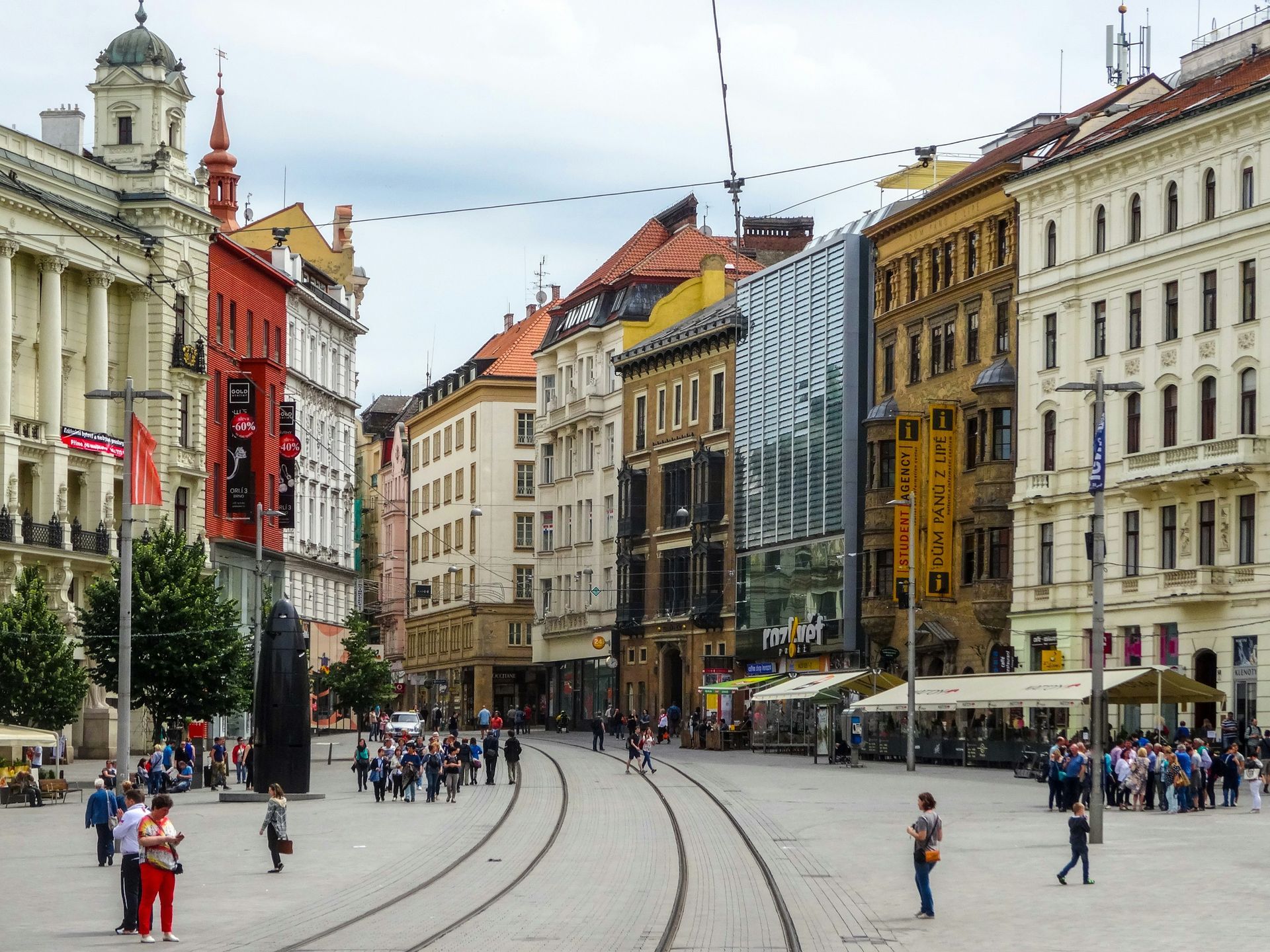
Kraków to Brno is about 340 km by road and there is no direct train. See travel times, stops worth making and how a private transfer compares.
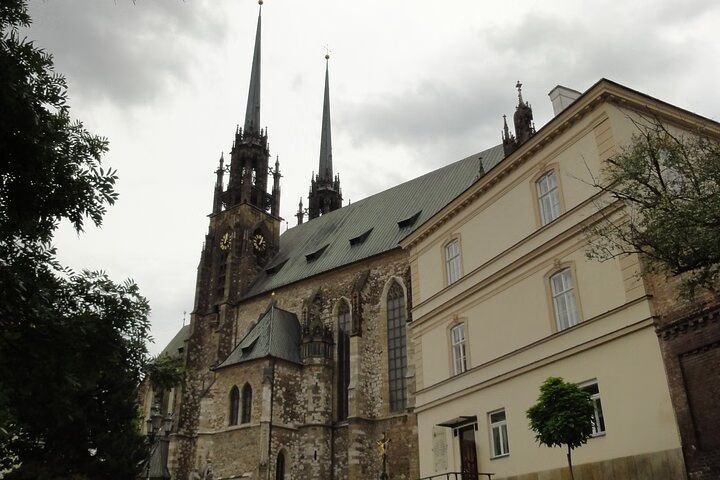
Plan one day in Brno: the dragon at the Old Town Hall, the astronomical clock at 11:00, the ossuary, Špilberk Castle and Villa Tugendhat.
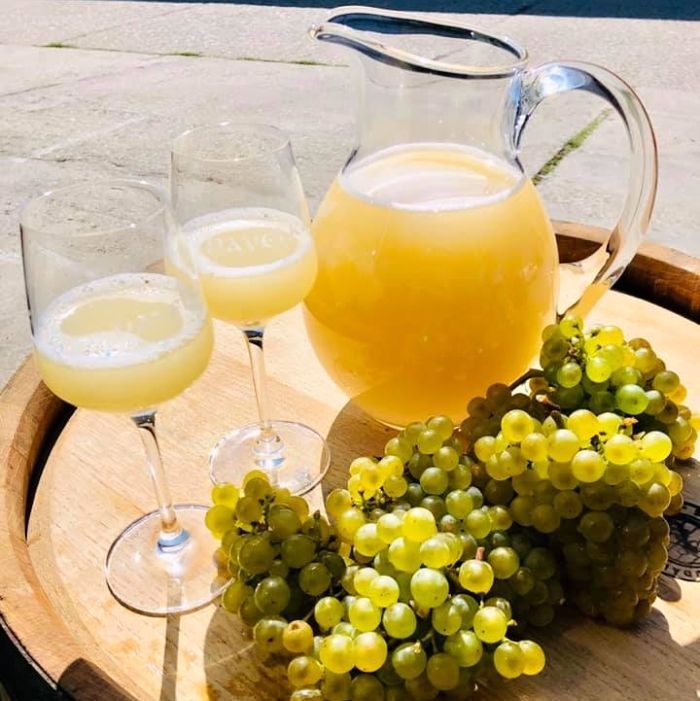
Burčák is Moravia's partly fermented young wine, sold only from August 1 to November 30. See what it tastes like, how to drink it and where to try it.
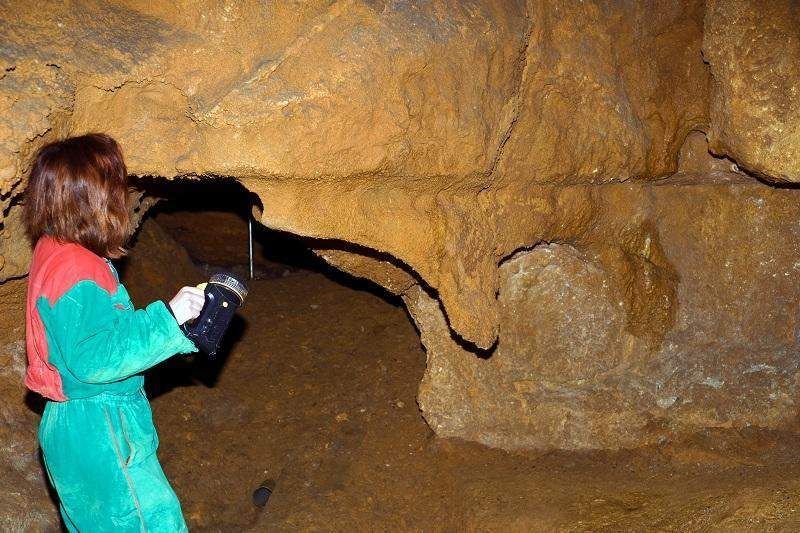
Five cave systems are open to visitors in the Moravian Karst. Compare Punkva, Balcarka, Kateřinská
and others, and see how to fit them into one day.
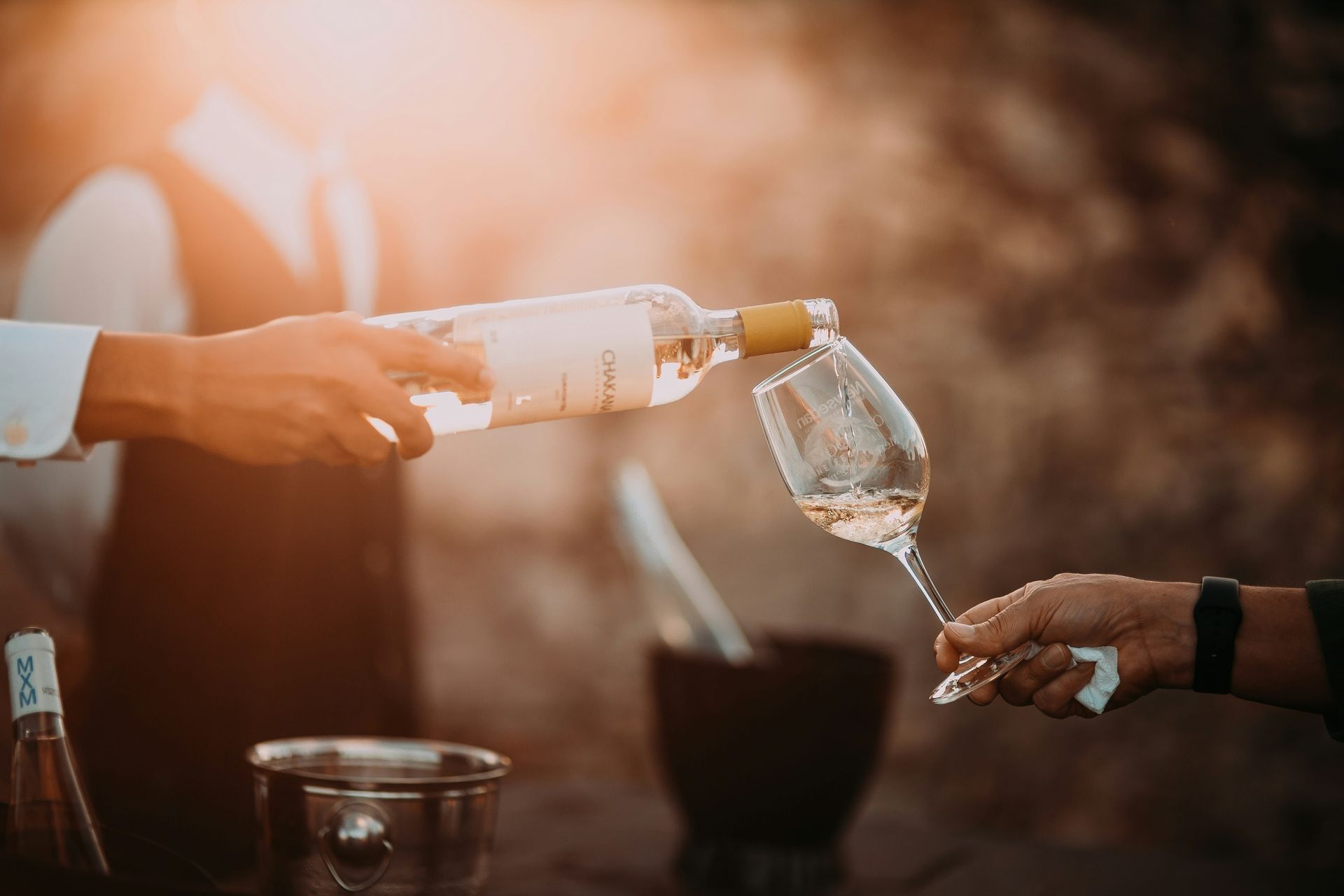
Group tasting Moravian wine in a traditional cellar
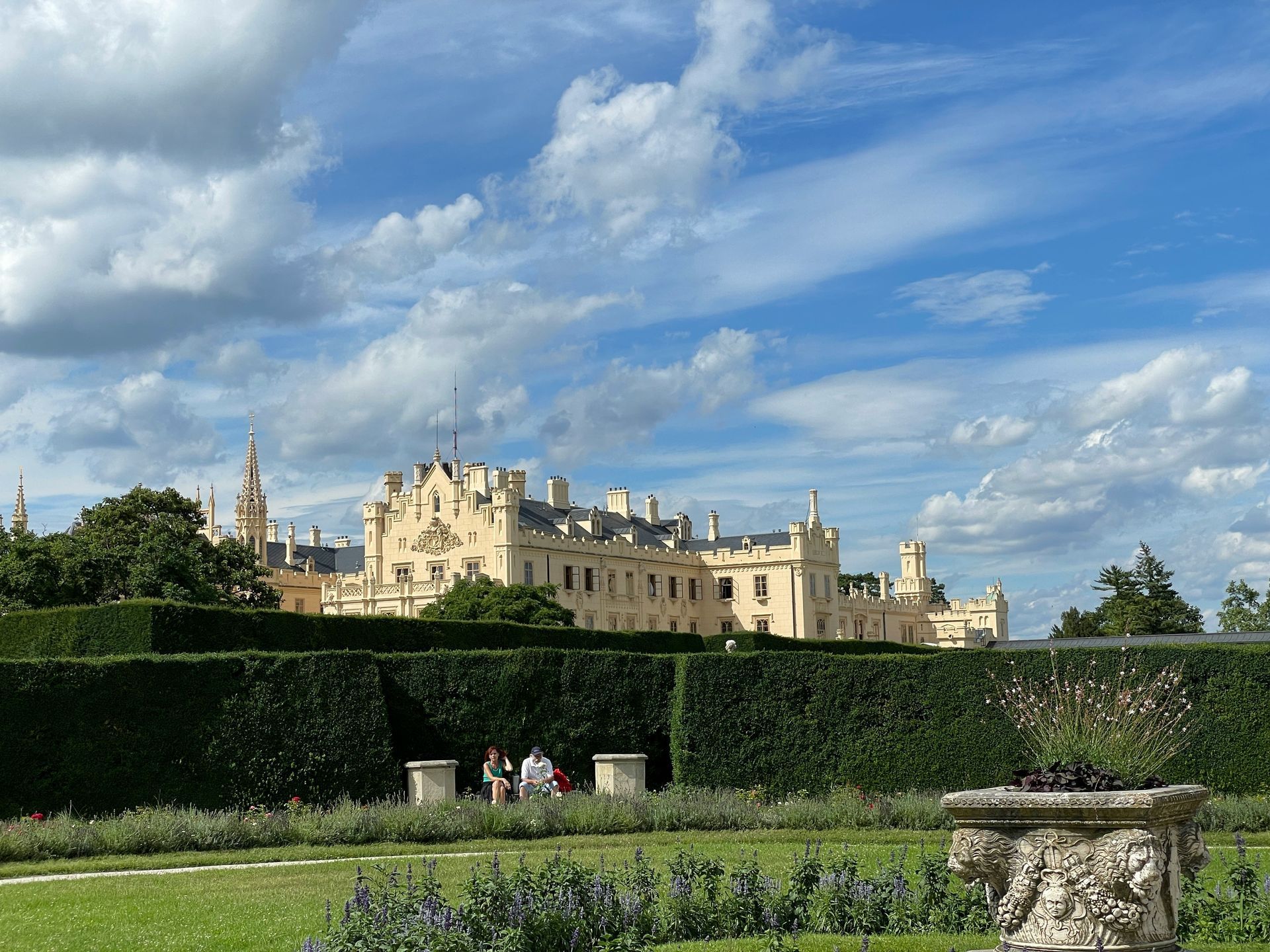
Lednice has the Tudor Gothic château and gardens; Valtice has the Baroque castle and the
national Wine Salon. See how to plan both in one relaxed day.
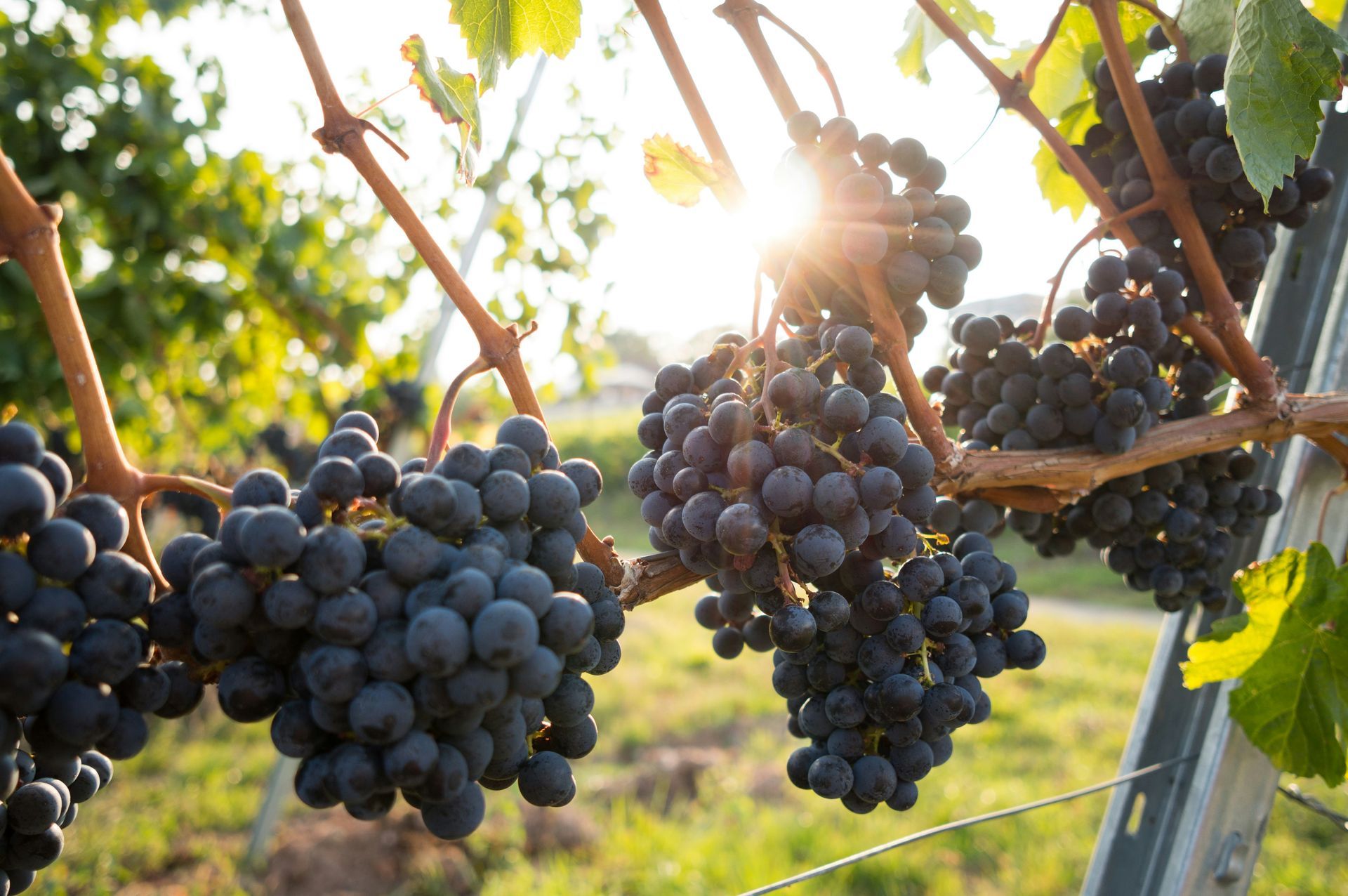
Moravia grows about 96% of Czech wine. Learn the four subregions, the grapes to try, from
Grüner Veltliner to Pálava, and how to taste them on tour.
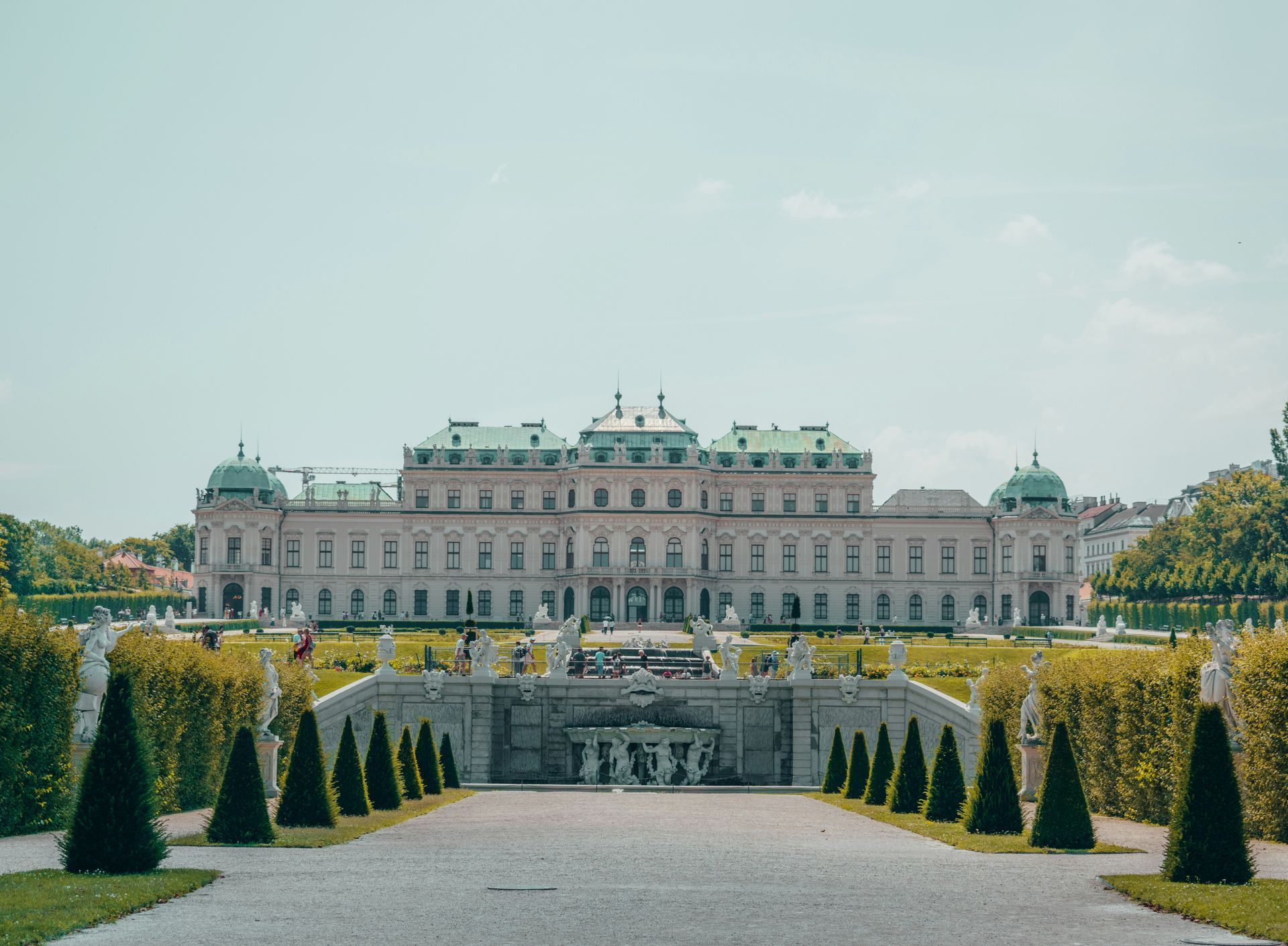
Brno to Vienna is about 1.5 hours by train and 1.5–2 hours by road. Compare the train with a
private door-to-door transfer and choose what fits your trip.
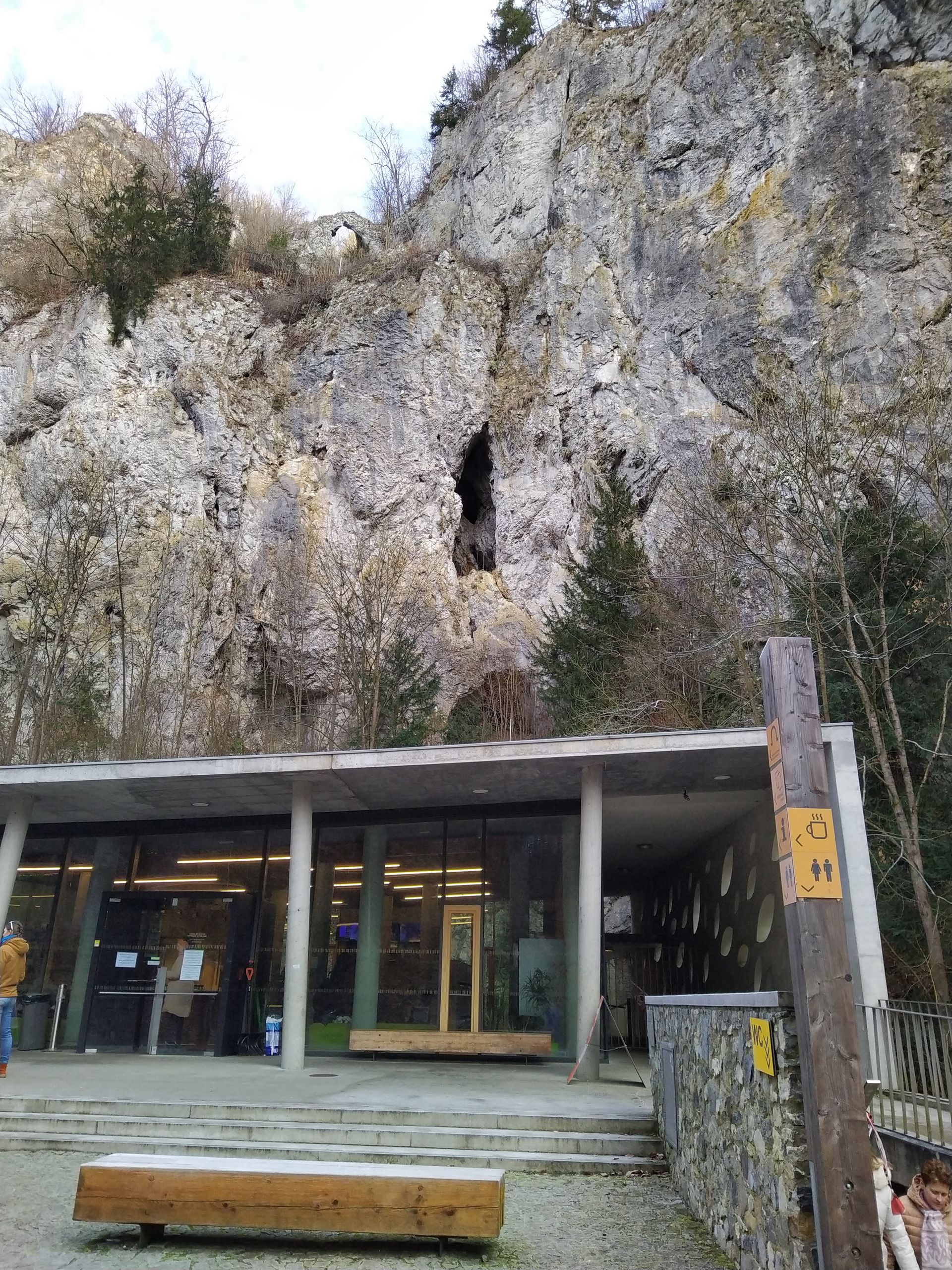
Everything to know before visiting the Punkva Caves and Macocha Abyss in the Moravian Karst: the underground boat ride, the abyss depth, booking tips and how to get there from Brno.