BLOG
A city built on six centuries of tunnels, cellars and bones
Brno's historic centre sits on top of a genuinely extensive underground world, cellars, water reservoirs, wartime shelters and a mass grave that went undiscovered for the better part of a century. Two sites make up the core of any visit: the Ossuary at the Church of St James and the Labyrinth under the Vegetable Market, both run together as part of the city's official underground tour network.
Europe's second-largest ossuary
Beneath St James Square, under the Gothic Church of St James, lies a set of underground chambers holding the remains of an estimated 50,000 people, making it, after the Catacombs of Paris, the second-largest ossuary in Europe. A cemetery had already stood at this spot by the start of the 13th century, and as the walled medieval city ran out of burial space, remains were routinely exhumed after ten to twelve years and moved into these underground vaults to free up ground for new graves, a common practice across medieval Europe. Many of the bones here date from the plagues, the Thirty Years' War and other conflicts that repeatedly swept through the city. Remarkably, the ossuary was completely forgotten for generations and only rediscovered in 2001, after which it took a decade of restoration before opening to the public in 2012. Because it remains a place of religious reverence rather than a pure attraction, entry is limited to small groups at a time.
The Labyrinth under the Vegetable Market
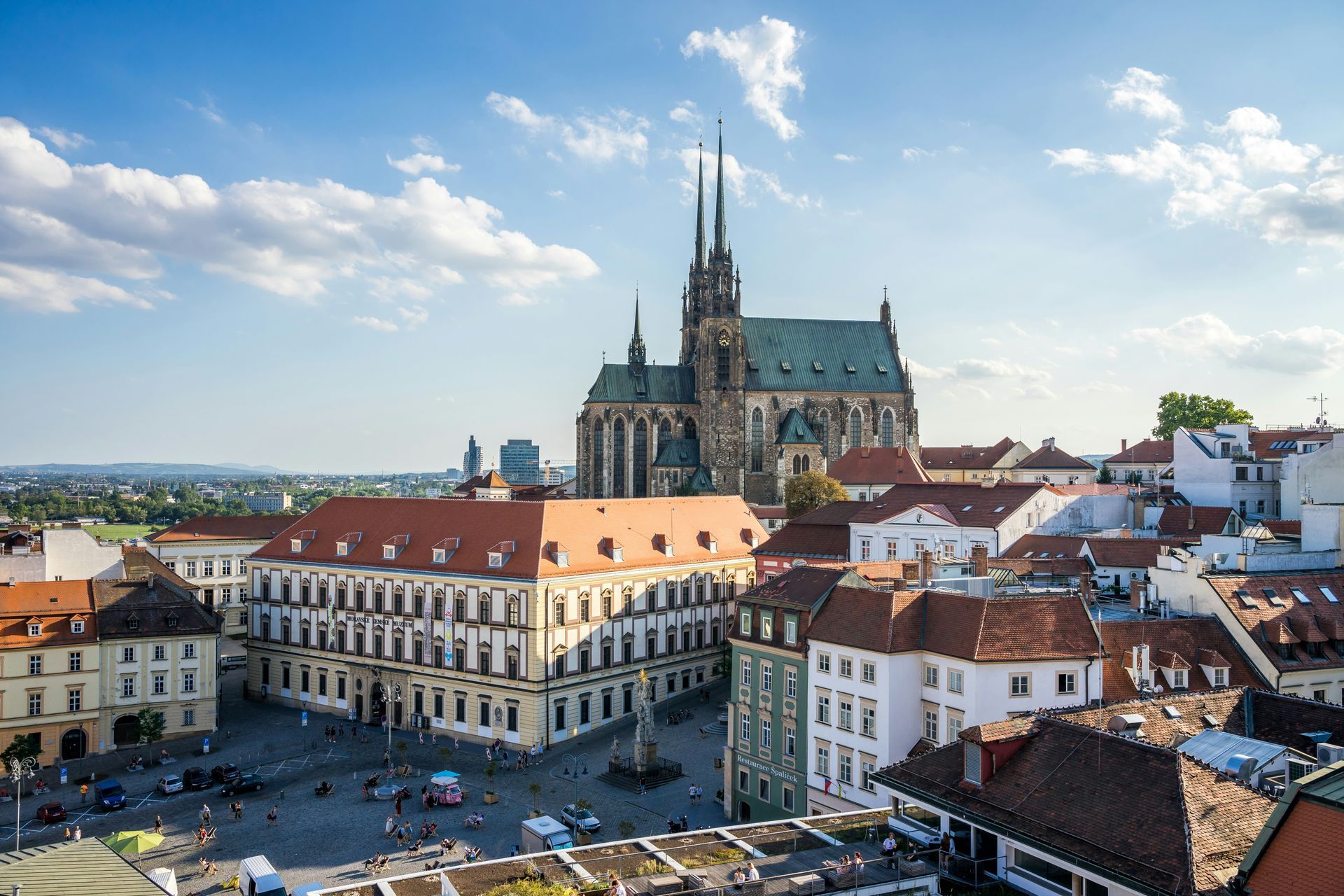
A short walk away, beneath Zelný trh (the Vegetable Market one of Brno's oldest squares, still a working produce market today), a network of Baroque cellars connects into what's known as the Labyrinth under the Vegetable Market. Originally built to store food and wine and to shelter townspeople during sieges and wars, the cellars today house a themed exhibition on medieval city life, including a reconstructed alchemist's workshop and displays on punishment and justice.
Beyond the two main sites
Brno's underground network extends further than most visitors realise: the 10-Z Bunker, a Cold War-era nuclear shelter dug into the rock beneath Špilberk Castle and designed to hold up to 500 people, and the 19th-century underground water reservoirs at Žlutý kopec, whose cathedral-like brick vaulting has drawn comparisons to Istanbul's Basilica Cistern, both offer very different underground experiences for visitors with more time.
Planning a visit
Combination tickets covering the Ossuary and the Labyrinth (and sometimes the nearby Mint Master's Cellar) are available at a modest discount, and each individual site takes 15–30 minutes to visit properly. Temperatures underground stay cool and slightly damp year-round, so a light layer is worth bringing even in summer.
Combine the underground with the city's legends on our Brno: 3-Hour History & Legends Walking Tour